When business gets pressured, there’s often a familiar pattern. A campaign underperforms, so we scrap it. Bookings or sales soften, so we go looking for the big fix: a discount, a price offer or immediate budget cuts. Or we set even bigger goals to make up what we missed and hope things will go viral and change the world!
I understand the impulse. When the pressure is on, big problems seem to demand big solutions. But after more than two decades working across marketing and strategy, I’ve developed an extra tool in my toolbox that’s a bit different. I’ve found that more often than not, the growth you could be looking for is hiding in the small stuff.
I call these the Small Bigs.
Where the idea comes from
The term comes from The Small BIG: Small Changes That Spark Big Influence by Steve Martin, Noah Goldstein and Robert Cialdini. Drawing on behavioural science, they show how tiny, often low-cost changes, such as a word in a message, the order of options or how a request is framed, can shift how people respond in surprisingly large ways. I remember an agency pitching for my account one time and saying how they’d saved an airline millions of dollars when they found that no one really used the salt and pepper sachets in the meals, so they ditched them and stocked a couple of shakers in the crew area instead. Small idea. Big outcome.
I love that thinking, and I like to take it a step further and apply it strategically. Small Bigs aren’t just clever behavioural nudges. They’re a mindset about how to grow a business when there isn’t the budget, the obvious market, time or appetite for a big swing.
The trouble with abandoning too early
One of the most common things I see is good work abandoned before it has had a chance to succeed. A campaign goes out, the results are underwhelming, and it’s quietly shelved. Then the team starts from scratch on something new, with a new brief, new creative and new costs.
But a campaign that didn’t work isn’t necessarily a campaign that can’t work. Often it’s one or two adjustments away. Perhaps the offer was right but the timing was wrong, or the message was strong but the audience needed refining. The image might have been beautiful but didn’t show the experience people were actually buying, or the booking path was just one step too many.
Iteration is unglamorous. It doesn’t make for an exciting launch. But tweaking, testing and refining what you already have is usually faster, cheaper and far more instructive than starting over. Each small change teaches you something about your customer, and that learning compounds. And in this day and age, customers usually have a lot to say, so just ask!
Look again at your data, especially the bits you’ve overlooked
Here’s a Small Big I come back to again and again: the segment you’ve been treating as a third or fourth priority might be the one that carries you through a difficult season.
Most businesses have a clear picture of their “core” customer, and that’s where the energy and budget go. But when I sit down with operators and actually look at their booking data, enquiries and reviews, there’s often a quieter group in the background. It might be midweek visitors, solo travellers, small corporate groups, people travelling with older parents, repeat purchasers who buy twice but not the third time or locals within a couple of hours’ drive. They’re already finding you, without much effort on your part.
When the core market softens, these secondary segments can become your best opportunity. They often need only a small shift to convert more strongly: a personal invitation, a tailored package, a message that speaks directly to them, or a product tweak that removes a barrier. The investment is modest, and the return can be significant.
The answer isn’t always to find new customers. Sometimes it’s to notice the ones you already have.
The answers are often already in the room
This is where my work in human-centred design comes in. One of its most consistent lessons is that the people closest to the customer usually know the most about what’s working and what isn’t.
Your front-of-house staff hear the questions guests ask. Your reservations or customer service team knows where people hesitate before booking or buying. Your guides, chefs and housekeepers notice the small moments that delight people, and the small frustrations that never make it into a review. Yet in many businesses, those insights never reach the people making strategic decisions.
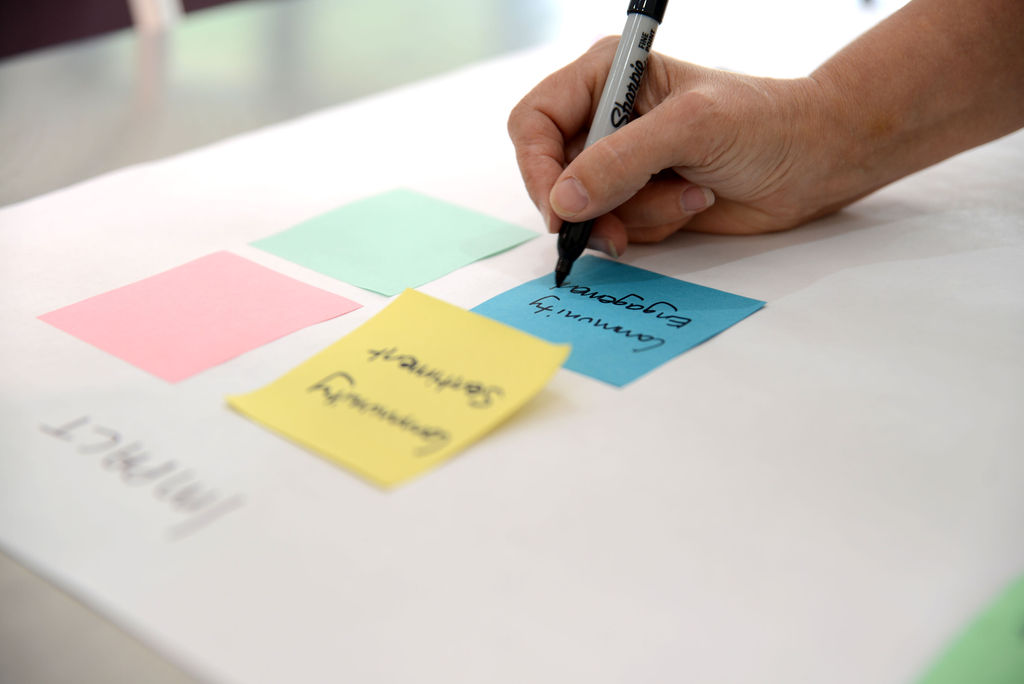
When you bring your team together and ask the right questions, the ideas start to flow. Not grand, expensive ideas, but practical ones. “People always ask whether they can do X.” “We get lots of enquiries for Y but we don’t really offer it.” “Guests love Z, but we never mention it anywhere.” These are Small Bigs in waiting.
Tapping into your business’s collective knowledge does something else too. It builds ownership. When your team helps shape the solution, they’re invested in making it work.
Small changes, big difference
In challenging times, it’s tempting to believe that only a dramatic move can turn things around. But steady, deliberate improvement is often what sustains a business. That means refining rather than abandoning, looking again at the data, taking a secondary segment seriously and listening to your own people.
None of these ideas are flashy, and that’s rather the point. Small Bigs are within reach of every business, whatever its size or budget. They reward curiosity, patience and a willingness to look closely at what’s already in front of you.
Let’s find your Small Bigs
If you’d like to uncover where your next growth could be coming from, I run growth-focused workshops that bring your team together to do exactly that. We dig into your data, test assumptions and surface the practical, achievable changes that can make a real difference.
Contact Dana at Nourish Group Consulting today to bring your team together to see what small, big ideas are lurking just below the surface.